
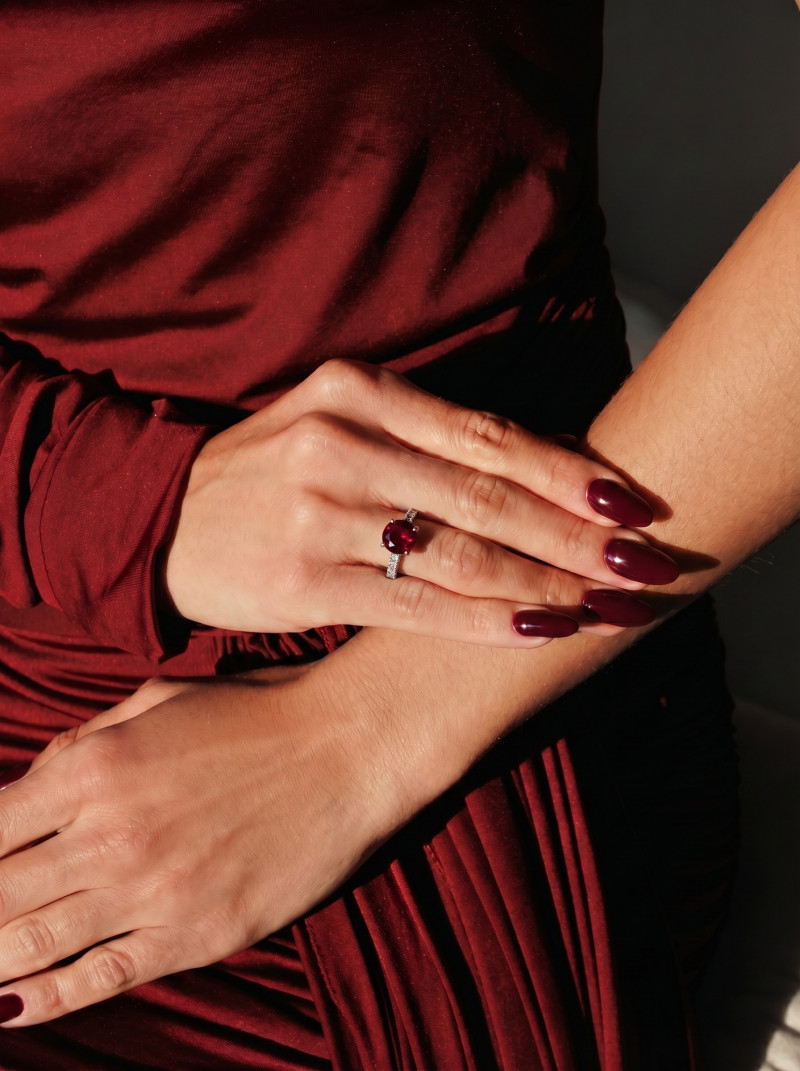
Ruby is not a stone that simply goes with everything. It is a stone that says something. Sometimes about a person, sometimes about a mood, and sometimes simply about wanting a little more life than classic choices allow.
For a long time, with diamonds dominating, many have become accustomed to the aesthetics of a clear, light-reflecting stone. But ruby works in a completely different way. It doesn’t so much play with light as it creates depth. Its color is not a surface effect—it seems to live inside the stone, making the jewelry feel warmer, closer, less sterile. It doesn’t shine like a diamond—it “burns.” Because of this, jewelry with a ruby always carries warmth, even a touch of emotion. And perhaps that is why ruby is never a random choice.
Where do rubies come from and how do they become jewelry?
Rubies form in nature over millions of years under high pressure and temperature. They are found in different parts of the world—the most famous sources are Myanmar (Burma), Thailand, Sri Lanka, and Mozambique. Each location gives the stone slightly different оттенок, clarity, and character.
A mined ruby is not yet the stone we see in jewelry. Like a diamond, it is first a raw material that must be carefully processed. Rubies are usually cut in a way that preserves as much color depth as possible, which is why their cutting differs from brilliant cuts. The goal here is not maximum light reflection, but maintaining the richness of color.
According to manager Airidas Ulevičius, a well-cut ruby never looks flat—it has an inner depth that reveals itself with movement and changing light. That is why working with this stone requires not only technique but also sensitivity.
A color with a mood
Ruby is often described as red, but in reality, it has many shades—from deep, rich, almost wine-like tones to lighter, pinkish hues. Sometimes it is warm, sometimes it carries a subtle violet or brownish undertone.
There is even a term “pigeon blood” color—one of the most valuable ruby varieties, known for its vivid yet deep red. However, interestingly, it is not the most beautiful to everyone.
Airidas notes that people often think they want the classic red, but after seeing different stones in person, they realize they are drawn to a completely different shade—sometimes softer, sometimes darker. This is natural, as ruby strongly reacts to light and skin tone.
The same stone can look different:
- in daylight – lighter, more vibrant
- in the evening – deeper, richer
- on different skin tones – warmer or cooler
That’s why ruby is not just a color. It is a feeling.
Not about size, but about feeling
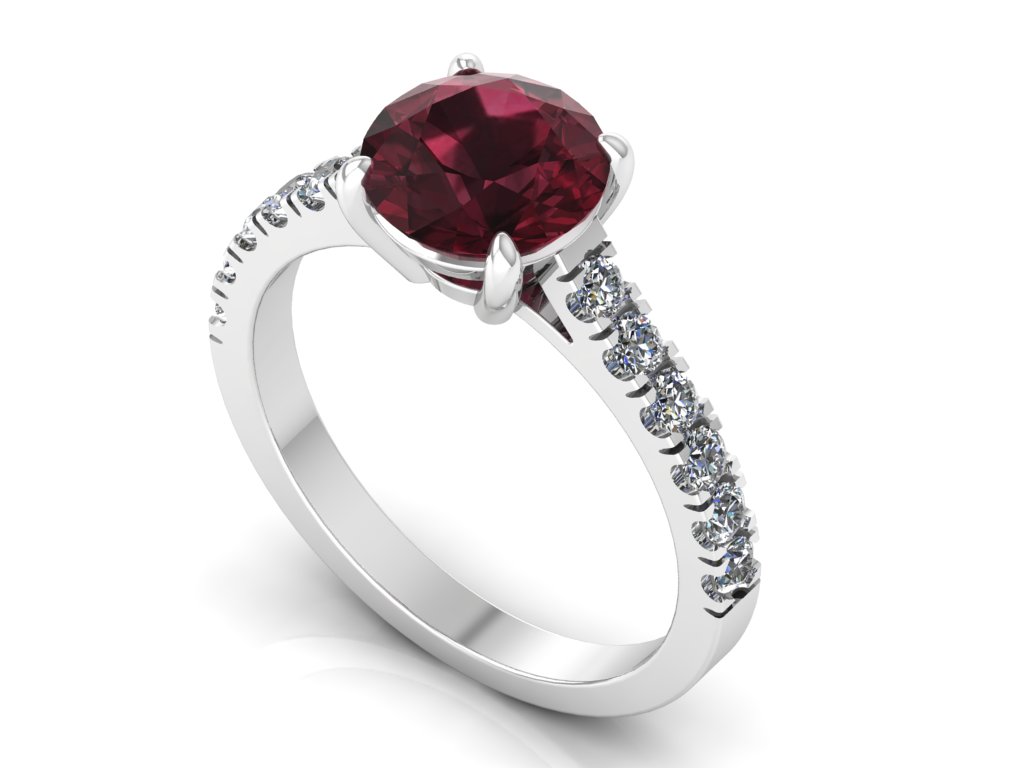
Ruby is rarely chosen for size or impact. More often—it is chosen simply because it feels right. Airidas observes that people who choose rubies have usually moved past the stage where shine or effect is most important. They start looking for something with character, but not too obvious. That’s why ruby in jewelry often appears subtly—a small stone in a ring, a delicate accent in earrings, or a barely visible detail in a necklace. And that is when it works most powerfully—not as the main highlight, but as a hidden detail noticed over time.
A stone with history and symbolism
Ruby has long been associated with love, life, and energy. It is one of those stones with strong symbolism, though today it becomes more personal.
For some, it is a symbol of love.
For others—a memory.
For others—a beginning.
Airidas often notices that ruby is chosen when people want to give jewelry additional meaning. Sometimes it is just a tiny stone set into a ring or another piece. And even if it is not large or immediately noticeable, its meaning becomes far greater than its size.
There is also a beautiful trend—to start with one small ruby and add another over time. This creates a kind of story that grows together with the person.
The practical side that is rarely discussed
Ruby is not only beautiful but also durable. It belongs to the corundum group and is one of the harder gemstones, making it suitable for everyday wear.
This means it is not just for special occasions. On the contrary—it can become part of daily jewelry without losing its appearance.
Airidas points out that people sometimes fear colored stones, thinking they are less practical or harder to match. But ruby often becomes the element that ties an entire look together, adding life and warmth.
Why is ruby being rediscovered?
Perhaps because today, character is valued more than perfection.
Not what shines the most, but what feels real.
Ruby is not neutral. It always has an opinion. And that is exactly why it becomes a choice for those who no longer want just a beautiful piece of jewelry.
And perhaps most importantly—ruby never looks the same. It changes with light, with surroundings, with the person. And that is where its charm lies.
In conclusion
Ruby in jewelry is not about rules or trends.
It is a choice that often doesn’t come immediately—but when it does, it is precise and creates a clear character.

