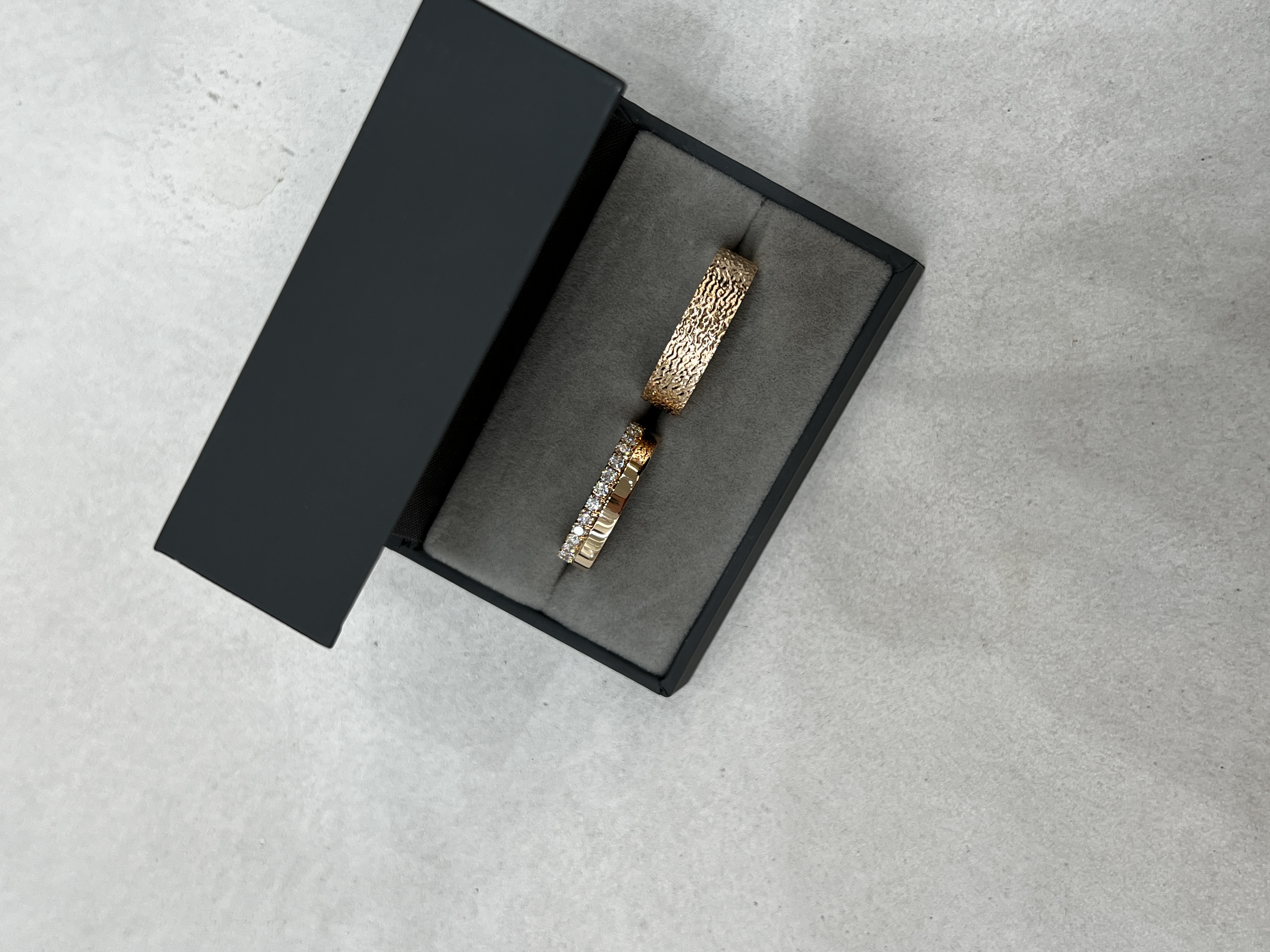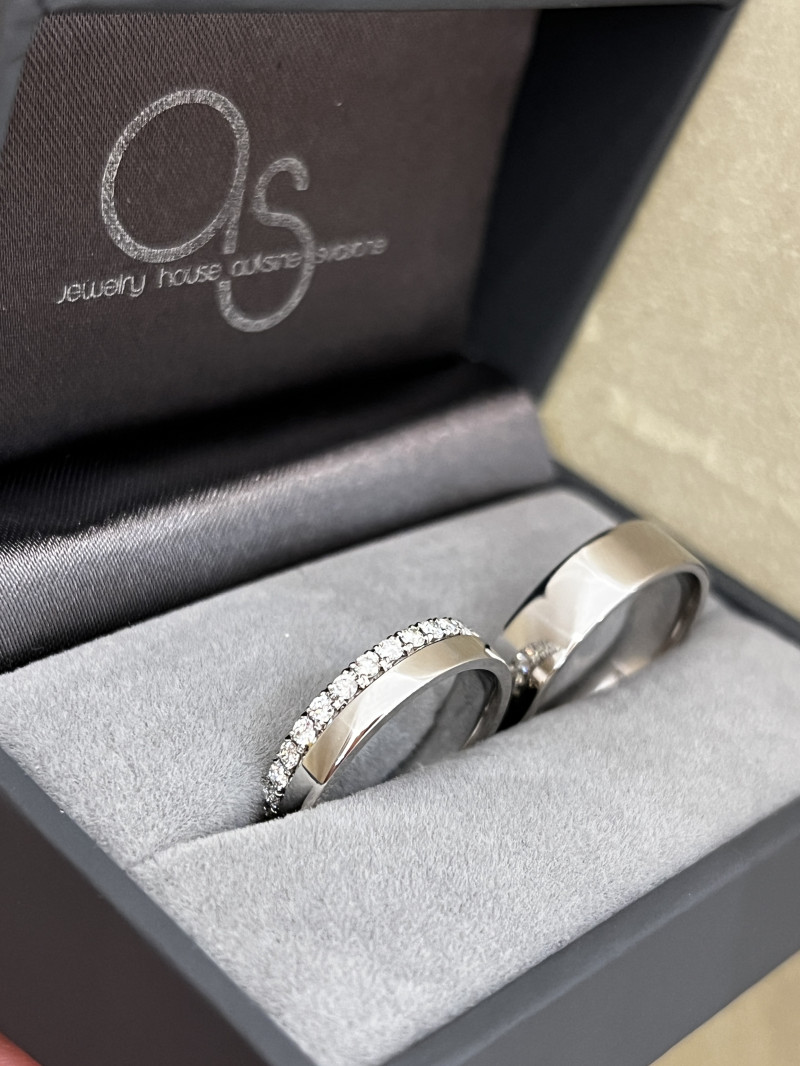
Weddings in Lithuania have always been more than just a celebration. They are a transition, a promise, a beginning of a new life. And although much has changed today, one thing remains – jewelry still holds special meaning.
Only now, it speaks differently.
Where did Lithuanian jewelry traditions come from?
In Lithuania, jewelry has long been not only an ornament but also a symbol.
Especially important were:
- rings
- brooches
- necklaces
- headpieces
Traditional jewelry: more than aesthetics
Lithuanian traditional jewelry was never just beautiful.
Every detail had its meaning:
- protective (against the "evil eye")
- symbolic (fertility, family, continuity)
- communal (belonging to a region)
Wedding rings in Lithuania: how things have changed
In the past, rings were not always as we imagine them today:
- they could be simpler
- sometimes not even made of gold
- the most important thing was the act of exchanging them
What has changed today?
Modern couples increasingly seek a balance between tradition and their own style.
Some trends include:
- return to simplicity
- subtle references to traditional elements
-
individual solutions instead of standard ones
Are Lithuanian traditions still relevant?
Yes, but they are no longer "direct."
Today, they appear through details:
- engraved symbols
- shapes reminiscent of ancient motifs
- choices that carry personal meaning
Jewelry as part of history
Previously, jewelry was often passed down from generation to generation.
Today, this tradition returns in another form:
- recycled old rings
- incorporated inherited stones
- creating new pieces with old stories
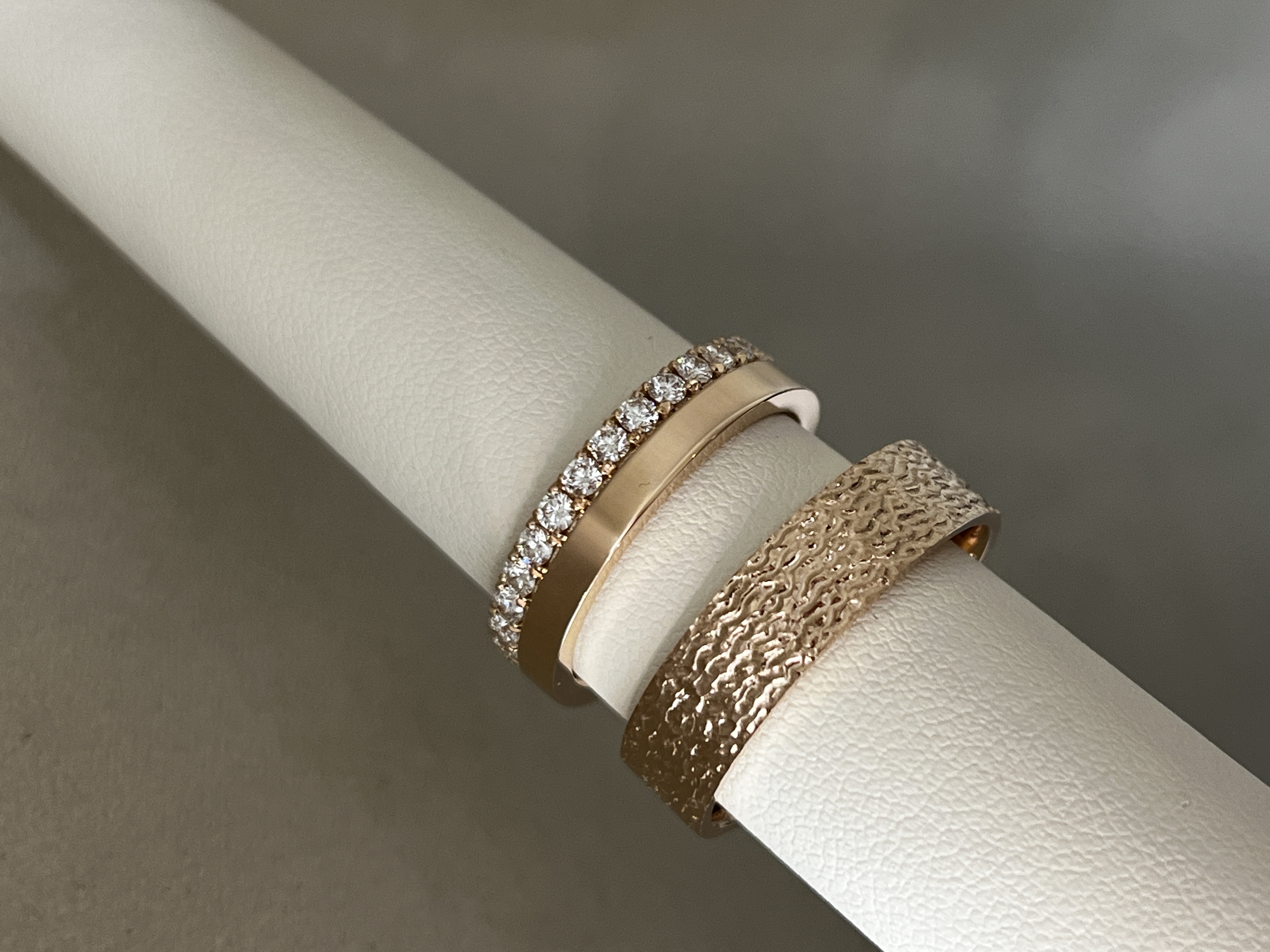
Between tradition and modernity
Modern weddings in Lithuania are no longer strictly defined.
One can:
- choose completely modern jewelry
- or subtly include traditional elements
What does this say about us today?
Lithuanian wedding jewelry traditions today are no longer about rules.
They are about:
- connection to the past
- personal choice
-
the desire to have something real
Wedding jewelry in Lithuania has always had meaning. Today, it has not disappeared – it has simply become more personal, quieter, yet deeper.